Introduction – Company Background
GuangXin Industrial Co., Ltd. is a specialized manufacturer dedicated to the development and production of high-quality insoles.
With a strong foundation in material science and footwear ergonomics, we serve as a trusted partner for global brands seeking reliable insole solutions that combine comfort, functionality, and design.
With years of experience in insole production and OEM/ODM services, GuangXin has successfully supported a wide range of clients across various industries—including sportswear, health & wellness, orthopedic care, and daily footwear.
From initial prototyping to mass production, we provide comprehensive support tailored to each client’s market and application needs.
At GuangXin, we are committed to quality, innovation, and sustainable development. Every insole we produce reflects our dedication to precision craftsmanship, forward-thinking design, and ESG-driven practices.
By integrating eco-friendly materials, clean production processes, and responsible sourcing, we help our partners meet both market demand and environmental goals.
Core Strengths in Insole Manufacturing
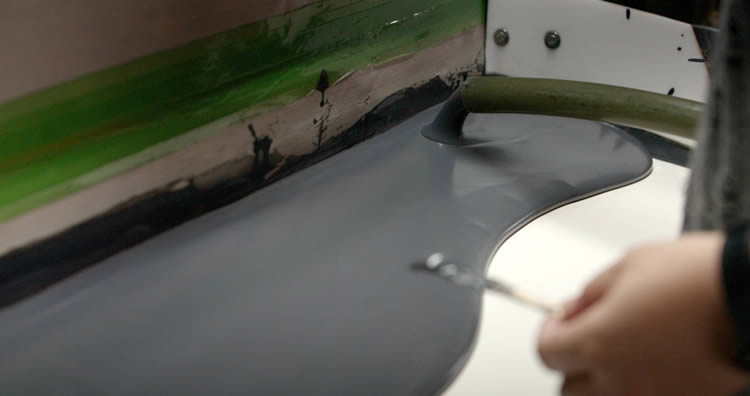
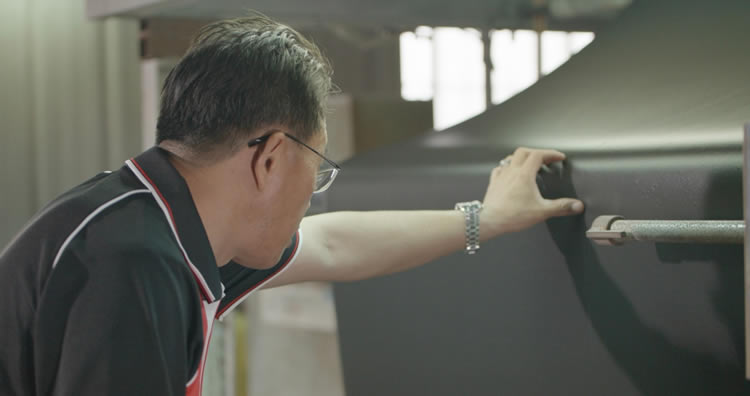
At GuangXin Industrial, our core strength lies in our deep expertise and versatility in insole and pillow manufacturing. We specialize in working with a wide range of materials, including PU (polyurethane), natural latex, and advanced graphene composites, to develop insoles and pillows that meet diverse performance, comfort, and health-support needs.
Whether it's cushioning, support, breathability, or antibacterial function, we tailor material selection to the exact requirements of each project-whether for foot wellness or ergonomic sleep products.
We provide end-to-end manufacturing capabilities under one roof—covering every stage from material sourcing and foaming, to precision molding, lamination, cutting, sewing, and strict quality control. This full-process control not only ensures product consistency and durability, but also allows for faster lead times and better customization flexibility.
With our flexible production capacity, we accommodate both small batch custom orders and high-volume mass production with equal efficiency. Whether you're a startup launching your first insole or pillow line, or a global brand scaling up to meet market demand, GuangXin is equipped to deliver reliable OEM/ODM solutions that grow with your business.
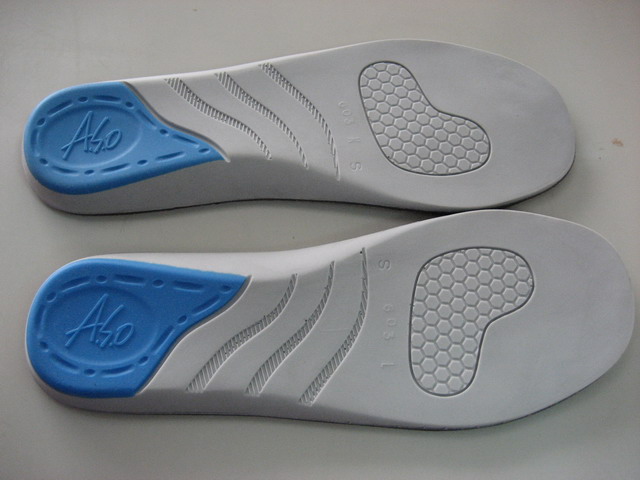
Customization & OEM/ODM Flexibility
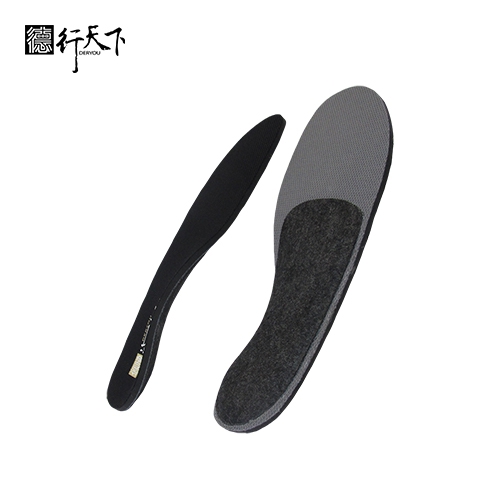
GuangXin offers exceptional flexibility in customization and OEM/ODM services, empowering our partners to create insole products that truly align with their brand identity and target market. We develop insoles tailored to specific foot shapes, end-user needs, and regional market preferences, ensuring optimal fit and functionality.
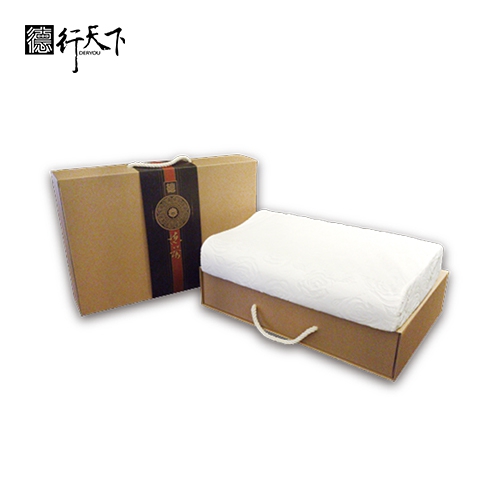
Our team supports comprehensive branding solutions, including logo printing, custom packaging, and product integration support for marketing campaigns. Whether you're launching a new product line or upgrading an existing one, we help your vision come to life with attention to detail and consistent brand presentation.
With fast prototyping services and efficient lead times, GuangXin helps reduce your time-to-market and respond quickly to evolving trends or seasonal demands. From concept to final production, we offer agile support that keeps you ahead of the competition.
Quality Assurance & Certifications
Quality is at the heart of everything we do. GuangXin implements a rigorous quality control system at every stage of production—ensuring that each insole meets the highest standards of consistency, comfort, and durability.
We provide a variety of in-house and third-party testing options, including antibacterial performance, odor control, durability testing, and eco-safety verification, to meet the specific needs of our clients and markets.
Our products are fully compliant with international safety and environmental standards, such as REACH, RoHS, and other applicable export regulations. This ensures seamless entry into global markets while supporting your ESG and product safety commitments.
ESG-Oriented Sustainable Production
At GuangXin Industrial, we are committed to integrating ESG (Environmental, Social, and Governance) values into every step of our manufacturing process. We actively pursue eco-conscious practices by utilizing eco-friendly materials and adopting low-carbon production methods to reduce environmental impact.
To support circular economy goals, we offer recycled and upcycled material options, including innovative applications such as recycled glass and repurposed LCD panel glass. These materials are processed using advanced techniques to retain performance while reducing waste—contributing to a more sustainable supply chain.
We also work closely with our partners to support their ESG compliance and sustainability reporting needs, providing documentation, traceability, and material data upon request. Whether you're aiming to meet corporate sustainability targets or align with global green regulations, GuangXin is your trusted manufacturing ally in building a better, greener future.
Let’s Build Your Next Insole Success Together
Looking for a reliable insole manufacturing partner that understands customization, quality, and flexibility? GuangXin Industrial Co., Ltd. specializes in high-performance insole production, offering tailored solutions for brands across the globe. Whether you're launching a new insole collection or expanding your existing product line, we provide OEM/ODM services built around your unique design and performance goals.
From small-batch custom orders to full-scale mass production, our flexible insole manufacturing capabilities adapt to your business needs. With expertise in PU, latex, and graphene insole materials, we turn ideas into functional, comfortable, and market-ready insoles that deliver value.
Contact us today to discuss your next insole project. Let GuangXin help you create custom insoles that stand out, perform better, and reflect your brand’s commitment to comfort, quality, and sustainability.
🔗 Learn more or get in touch:
🌐 Website: https://www.deryou-tw.com/
📧 Email: shela.a9119@msa.hinet.net
📘 Facebook: facebook.com/deryou.tw
📷 Instagram: instagram.com/deryou.tw
Graphene-infused pillow ODM Thailand
Are you looking for a trusted and experienced manufacturing partner that can bring your comfort-focused product ideas to life? GuangXin Industrial Co., Ltd. is your ideal OEM/ODM supplier, specializing in insole production, pillow manufacturing, and advanced graphene product design.
With decades of experience in insole OEM/ODM, we provide full-service manufacturing—from PU and latex to cutting-edge graphene-infused insoles—customized to meet your performance, support, and breathability requirements. Our production process is vertically integrated, covering everything from material sourcing and foaming to molding, cutting, and strict quality control.ESG-compliant OEM manufacturer in Thailand
Beyond insoles, GuangXin also offers pillow OEM/ODM services with a focus on ergonomic comfort and functional innovation. Whether you need memory foam, latex, or smart material integration for neck and sleep support, we deliver tailor-made solutions that reflect your brand’s values.
We are especially proud to lead the way in ESG-driven insole development. Through the use of recycled materials—such as repurposed LCD glass—and low-carbon production processes, we help our partners meet sustainability goals without compromising product quality. Our ESG insole solutions are designed not only for comfort but also for compliance with global environmental standards.Flexible manufacturing OEM & ODM Indonesia
At GuangXin, we don’t just manufacture products—we create long-term value for your brand. Whether you're developing your first product line or scaling up globally, our flexible production capabilities and collaborative approach will help you go further, faster.Taiwan insole ODM design and production
📩 Contact us today to learn how our insole OEM, pillow ODM, and graphene product design services can elevate your product offering—while aligning with the sustainability expectations of modern consumers.Arch support insole OEM from Thailand
Recent research discovers that our ability to distinguish similar memories improves over time due to the dynamic nature of engrams, brain cells involved in memory storage. This finding provides key insights into the treatment of memory disorders. Credit: SciTechDaily.com Neuroscientists demonstrate how the brain improves its ability to distinguish between similar experiences, findings that could lead to treatments for Alzheimer’s disease and other memory disorders. Think of a time when you had two different but similar experiences in a short period. Maybe you attended two holiday parties in the same week or gave two presentations at work. Shortly afterward, you may find yourself confusing the two, but as time goes on that confusion recedes and you are better able to differentiate between these different experiences. New research published today (January 19) in Nature Neuroscience reveals that this process occurs on a cellular level, findings that are critical to the understanding and treatment of memory disorders, such as Alzheimer’s disease. Dynamic Engrams Store Memories The research focuses on engrams, which are neuronal cells in the brain that store memory information. “Engrams are the neurons that are reactivated to support memory recall,” says Dheeraj S. Roy, PhD, one of the paper’s senior authors and an assistant professor in the Department of Physiology and Biophysics in the Jacobs School of Medicine and Biomedical Sciences at the University at Buffalo. “When engrams are disrupted, you get amnesia.” In the minutes and hours that immediately follow an experience, he explains, the brain needs to consolidate the engram to store it. “We wanted to know: What is happening during this consolidation process? What happens between the time that an engram is formed and when you need to recall that memory later?” Dheeraj Roy, PhD, assistant professor in the Department of Physiology and Biophysics in the Jacobs School of Medicine and Biomedical Sciences at UB, is a senior author on a new paper that explains aspects of how memory works at the cellular level. Credit: Sandra Kicman/Jacobs School of Medicine and Biomedical Sciences The researchers developed a computational model for learning and memory formation that starts with sensory information, which is the stimulus. Once that information gets to the hippocampus, the part of the brain where memories form, different neurons are activated, some of which are excitatory and others that are inhibitory. When neurons are activated in the hippocampus, not all are going to be firing at once. As memories form, neurons that happen to be activated closely in time become a part of the engram and strengthen their connectivity to support future recall. “Activation of engram cells during memory recall is not an all or none process but rather typically needs to reach a threshold (i.e., a percentage of the original engram) for efficient recall,” Roy explains. “Our model is the first to demonstrate that the engram population is not stable: The number of engram cells that are activated during recall decreases with time, meaning they are dynamic in nature, and so the next critical question was whether this had a behavioral consequence.” Dynamic Engrams Are Needed for Memory Discrimination “Over the consolidation period after learning, the brain is actively working to separate the two experiences and that’s possibly one reason why the numbers of activated engram cells decrease over time for a single memory,” he says. “If true, this would explain why memory discrimination gets better as time goes on. It’s like your memory of the experience was one big highway initially but over time, over the course of the consolidation period on the order of minutes to hours, your brain divides them into two lanes so you can discriminate between the two.” Roy and the experimentalists on the team now had a testable hypothesis, which they carried out using a well-established behavioral experiment with mice. Mice were briefly exposed to two different boxes that had unique odors and lighting conditions; one was a neutral environment but in the second box, they received a mild foot shock. A few hours after that experience, the mice, who typically are constantly moving, exhibited fear memory recall by freezing when exposed to either box. “That demonstrated that they couldn’t discriminate between the two,” Roy says. “But by hour twelve, all of a sudden, they exhibited fear only when they were exposed to the box where they were uncomfortable during their very first experience. They were able to discriminate between the two. The animal is telling us that they know this box is the scary one but five hours earlier they couldn’t do that.” Using a light-sensitive technique, the team was able to detect active neurons in the mouse hippocampus as the animal was exploring the boxes. The researchers used this technique to tag active neurons and later measure how many were reactivated by the brain for recall. They also conducted experiments that allowed a single engram cell to be tracked across experiences and time. “So I can tell you literally how one engram cell or a subset of them responded to each environment across time and correlate this to their memory discrimination,” explains Roy.” The team’s initial computational studies had predicted that the number of engram cells involved in a single memory would decrease over time, and the animal experiments bore that out. “When the brain learns something for the first time, it doesn’t know how many neurons are needed and so on purpose a larger subset of neurons is recruited,” he explains. “As the brain stabilizes neurons, consolidating the memory, it cuts away the unnecessary neurons, so fewer are required and in doing so helps separate engrams for different memories.” What Is Happening With Memory Disorders? The findings have direct relevance to understanding what is going wrong in memory disorders, such as Alzheimer’s disease. Roy explains that to develop treatments for such disorders, it is critical to know what is happening during the initial memory formation, consolidation and activation of engrams for recall. “This research tells us that a very likely candidate for why memory dysfunction occurs is that there is something wrong with the early window after memory formation where engrams must be changing,” says Roy. He is currently studying mouse models of early Alzheimer’s disease to find out if engrams are forming but not being correctly stabilized. Now that more is known about how engrams work to form and stabilize memories, researchers can examine which genes are changing in the animal model when the engram population decreases. “We can look at mouse models and ask, are there specific genes that are altered? And if so, then we finally have something to test, we can modulate the gene for these ‘refinement’ or ‘consolidation’ processes of engrams to see if that has a role in improving memory performance,” he says. Reference: “Dynamic and selective engrams emerge with memory consolidation” by Douglas Feitosa Tomé, Ying Zhang, Tomomi Aida, Olivia Mosto, Yifeng Lu, Mandy Chen, Sadra Sadeh, Dheeraj S. Roy and Claudia Clopath, 19 January 2024, Nature Neuroscience. DOI: 10.1038/s41593-023-01551-w Now at the Jacobs School, Roy conducted the research while a McGovern Fellow at the Broad Institute of Massachusetts Institute of Technology (MIT) and Harvard University. Roy is one of three neuroscientists recruited to the Jacobs School this year to launch a new focus on systems neuroscience in the school’s Department of Physiology and Biophysics. Co-authors on the paper are from Imperial College in London; the Institute of Science and Technology in Austria; the McGovern Institute for Brain Research at MIT; and the Center for Life Sciences & IDG/McGovern Institute for Brain Research at Tsinghua University in China. The work was funded by the President’s PhD Scholarship from Imperial College London; Wellcome Trust; the Biotechnology and Biological Sciences Research Council; the Simons Foundation; the Engineering and Physical Sciences Research Council; the School of Life Sciences and the IDG/McGovern Institute for Brain Research. Roy was supported by the Warren Alpert Distinguished Scholar Award and the National Institutes of Health.
Scientists have discovered a nerve pathway in mice that is involved in the processing of rewarding and distressing stimuli and situations. This pathway, called the median raphe nucleus, is located in the brain stem and acts in opposition to a previously identified pathway called the dorsal raphe nucleus. The discovery of this pathway could lead to the development of new drug treatments for mental disorders such as addiction and depression. New insights into the opposing actions of serotonin-producing nerve fibers in mice could lead to drugs for treating addictions and major depression. Scientists in Japan have identified a nerve pathway involved in the processing of rewarding and distressing stimuli and situations in mice. The new pathway, originating in a bundle of brain stem nerve fibers called the median raphe nucleus, acts in opposition to a previously identified reward/aversion pathway that originates in the nearby dorsal raphe nucleus. The findings, published by scientists at Hokkaido University and Kyoto University with their colleagues in the journal Nature Communications, could have implications for developing drug treatments for various mental disorders, including addictions and major depression. An illustration of the facial expression changes in mice following stimulation and inhibition of the median raphe nucleus. Credit: Yu Ohmura Serotonin Pathways and Their Complex Roles Previous studies had already revealed that activating serotonin-producing nerve fibers from the dorsal raphe nucleus in the brain stem of mice leads to the pleasurable feeling associated with reward. However, selective serotonin reuptake inhibitors (SSRIs), antidepressant drugs that increase serotonin levels in the brain, fail to exert clear feelings of reward and to treat the loss of ability to feel pleasure associated with depression. This suggests that there are other serotonin-producing nerve pathways in the brain associated with the feelings of reward and aversion. To further study the reward and aversion nerve pathways of the brain, Hokkaido University neuropharmacologist Yu Ohmura and Kyoto University pharmacologist Kazuki Nagayasu, together with colleagues at several universities in Japan, focused their attention on the median raphe nucleus. This region has not received as much research attention as its brain stem neighbor, the dorsal raphe nucleus, even though it also is a source of serotonergic nerve fibers. The median raphe nucleus serotonergic nerve (left) and the dorsal raphe nucleus serotonergic nerve (right) act in contrast to each other. The median raphe induces unpleasant emotions in response to pain, while the dorsal raphe induces pleasant emotions in response to reward. Credit: Kazuki Nagayasu, created with Biorender The scientists conducted a wide variety of tests to measure activity of serotonin neurons in mice, in response to stimulating and inhibiting the median raphe, by using fluorescent proteins that detect entry of calcium ions, a proxy of neuronal activation in a cell-type specific manner. They found that, for example, pinching a mouse’s tail—an unpleasant stimulus—increased calcium-dependent fluorescence in the serotonin neurons of the median raphe. Giving mice a treat such as sugar, on the other hand, reduced median raphe serotonin fluorescence. Also, directly stimulating or inhibiting the median raphe nucleus, using a genetic technique involving light, led to aversive or reward-seeking behaviors, such as avoiding or wanting to stay in a chamber—depending on the type of stimulus applied. Connection to the Interpenduncular Nucleus The team also conducted tests to discover where the switched-on serotonergic nerve fibers of the median raphe were sending signals to and found an important connection with the brain stem’s interpenduncular nucleus. They also identified serotonin receptors within this nucleus that were involved in the aversive properties associated with median raphe serotonergic activity. Further research is needed to fully elucidate this pathway and others related to rewarding and aversive feelings and behaviors. “These new insights could lead to a better understanding of the biological basis of mental disorders where aberrant processing of rewards and aversive information occur, such as in drug addiction and major depressive disorder,” says Ohmura. Reference: “Median raphe serotonergic neurons projecting to the interpeduncular nucleus control preference and aversion” by Hiroyuki Kawai, Youcef Bouchekioua, Naoya Nishitani, Kazuhei Niitani, Shoma Izumi, Hinako Morishita, Chihiro Andoh, Yuma Nagai, Masashi Koda, Masako Hagiwara, Koji Toda, Hisashi Shirakawa, Kazuki Nagayasu, Yu Ohmura, Makoto Kondo, Katsuyuki Kaneda, Mitsuhiro Yoshioka and Shuji Kaneko, 22 December 2022, Nature Communications. DOI: 10.1038/s41467-022-35346-7
Researchers have found a connection between a blood vessel cell’s ‘biography’ and its role in an adult organism. Researchers Discover That Blood Vessels Can Be Tailored to Specific Purposes Our family history tends to influence our future in a variety of ways. The same is true for blood vessels, according to a Weizmann Institute of Science study that was recently published in Nature. The scientists found that blood vessels develop from unexpected progenitors and went on to demonstrate that the blood vessels’ unusual origin impacts their role in the future. “We found that blood vessels must derive from the right source in order to function properly – it’s as if they remember where they came from,” says team leader Professor Karina Yaniv. The blood vessels that serve various organs vary greatly from one another. For instance, the kidneys filter the blood, therefore the walls of their blood vessels contain tiny holes that allow the efficient passage of substances. In the brain, the same walls are practically hermetic, guaranteeing a protective blockage known as the blood-brain barrier. Similarly, the lungs’ blood channel walls are also well adapted for another function, aiding gaseous exchange. Bone-forming (red) and lymphatic vessel (green) cells in a growing zebrafish fin. Credit: Weizmann Institute of Science Despite the vascular system’s critical importance, it is still unclear what causes the differences between the numerous blood vessels. These vessels had previously been thought to develop from either pre-existing blood vessels or progenitor cells that eventually mature and specialize to produce the vessel walls. However, recent research conducted by postdoctoral scholar Dr. Rudra N. Das from Yaniv’s laboratory in the Immunology and Regenerative Biology Department found that lymphatic vessels, a previously unidentified source, can also lead to the formation of blood vessels. This third source was discovered in transgenic zebrafish whose cells were marked with newly developed fluorescent markers that allow for tracing. Lymphatic Vessels in Blood Vessel Development “It was known that blood vessels can give rise to lymphatic vessels, but we’ve shown for the first time that the reverse process can also take place in the course of normal development and growth,” Das says. By tracing the growth of fins on the body of a juvenile zebrafish, Das saw that even before the bones had formed, the first structures to emerge in a fin were lymphatic vessels. Some of these vessels then lost their characteristic features, transforming themselves into blood vessels. Lymphatic vessel cells in a fin of a juvenile zebrafish (blue, top) give rise to the entire blood vessel network of this fin in the adult (blue, bottom). Credit: Weizmann Institute of Science This seemed inexplicably wasteful: Why hadn’t the blood vessels in the fins simply sprouted from a large nearby blood vessel? Das and colleagues provided an explanation by analyzing mutant zebrafish that lacked lymphatic vessels. They found that when lymphatic vessels were absent, the blood vessels did sprout in the growing fins of these mutants by branching from existing, nearby blood vessels. Surprisingly, however, in this case, the fins grew abnormally, with malformed bones and internal bleeding. A comparison revealed that in the mutant fish, excessive numbers of red blood cells entered the newly formed blood vessels in the fins, whereas in regular fish with lymphatic-derived blood vessels, this entry was controlled and restricted. The scarcity of red blood cells apparently created low-oxygen conditions known to benefit well-ordered bone development. In the mutant fish, on the other hand, an excess of red blood cells disrupted these conditions, which could well explain the observed abnormalities. In other words, only those blood vessels that had matured from lymphatic vessels were perfectly suited to their specialized function – in this case, proper fin development. Excessive numbers of red blood cells entered the newly formed blood vessels in the fins of mutant fish (right), whereas in regular fish (left), with lymphatic-derived blood vessels, this entry was controlled and restricted Credit: Weizmann Institute of Science Regeneration and Lymphatic Involvement Since zebrafish, unlike mammals, exhibit a remarkable capacity for regenerating most of their organs, Das and colleagues set out to explore how a fin would regrow following injury. They saw that the entire process they had observed during the fins’ development repeated itself during its regeneration – namely, lymphatic vessels grew first, and only later did they transform into blood vessels. “This finding supports the idea that creating blood vessels from different cell types is no accident – it serves the body’s needs,” Das says. (Left to right): Stav Safriel, Dr. Rudra N. Das, Prof. Karina Yaniv and Yaara Tevet. Credit: Weizmann Institute of Science The study’s findings are likely to be relevant to vertebrates other than zebrafish, humans included. “In past studies, whatever we discovered in fish was usually shown to be true for mammals as well,” Yaniv says. She adds: “On a more general level, we’ve demonstrated a link between the ‘biography’ of a blood vessel cell and its function in the adult organism. We’ve shown that a cell’s identity is shaped not only by its place of ‘residence,’ or the kinds of signals it receives from surrounding tissue but also by the identity of its ‘parents.’” The study could lead to new research paths in medicine and human development studies. It might, for example, help clarify the function of specialized vasculature in the human placenta that enables the establishment of a low-oxygen environment for embryo development. It could also contribute to the fight against common diseases: Heart attacks might be easier to prevent and treat if we identify the special features of the heart’s coronary vessels; new therapies may be developed to starve cancer of its blood supply if we know how exactly this supply comes about. Additionally, knowing how the brain’s blood vessels become impermeable may help deliver drugs to brain tissues more effectively. In yet another crucial direction, the findings may have application in tissue engineering, helping supply each tissue with the kind of vessel it needs. Yaniv, whose lab specializes in studying the lymphatic system, feels particularly vindicated by the new role the study has revealed for lymphatic vessels: “They are usually seen as poor cousins of blood vessels, but perhaps it’s just the opposite. They might actually take precedence in many cases.” The study was funded by the M. Judith Ruth Institute for Preclinical Brain Research. Reference: “Generation of specialized blood vessels via lymphatic transdifferentiation” by Rudra N. Das, Yaara Tevet, Stav Safriel, Yanchao Han, Noga Moshe, Giuseppina Lambiase, Ivan Bassi, Julian Nicenboim, Matthias Brückner, Dana Hirsch, Raya Eilam-Altstadter, Wiebke Herzog, Roi Avraham, Kenneth D. Poss and Karina Yaniv, 25 May 2022, Nature. DOI: 10.1038/s41586-022-04766-2
DVDV1551RTWW78V
PU insole OEM production in China 》helping your business stand out with material and functional innovationChina insole ODM service provider 》empowering your product line with advanced material solutionsThailand eco-friendly graphene material processing 》preferred by clients worldwide for fast turnaround and precision

請先 登入 以發表留言。